The electric vehicle revolution has reached an undeniable turning point. While acceleration, torque, and vehicle dynamics have surpassed traditional combustion engines, a persistent challenge remains: energy replenishment. Eliminating the EV charging bottleneck requires more than raw battery capacity—it demands an end-to-end overhaul of energy density, power delivery, and grid infrastructure.
1. The Core Dilemma: Thermal Limits and Grid Constraints
Replacing fossil fuels with electric powertrains transfers the fueling burden from chemical storage to the electrical grid. Current lithium-ion architectures face physical limits when subjected to extreme current rates. Rapid charging generates intense internal heat within lithium-ion cells, leading to accelerated degradation, lithium plating, and potential thermal runaway if not managed precisely.
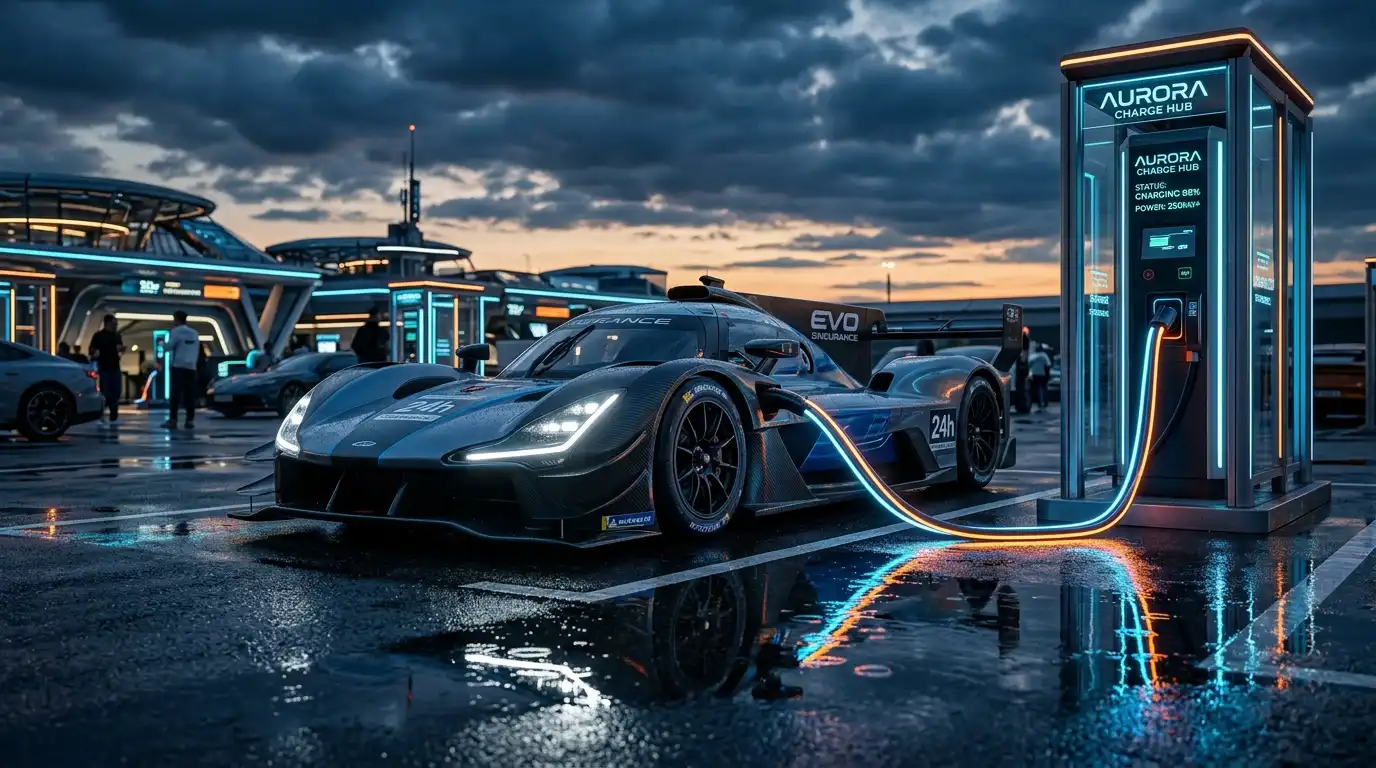
Simultaneously, the electrical grid faces localized load peaks. Plugging multiple high-performance electric vehicles into 350 kW DC fast chargers at a single station strains neighborhood distribution transformers. High C-rates—the measure of the charge or discharge current relative to cell capacity—require both steady voltage supply and robust cooling mechanisms at the charger handle, cable, and battery pack level. Resolving this constraint requires innovation at both ends of the wire: energy storage technology inside the car and grid infrastructure outside it.
2. Track-side Proving Grounds: Formula E and High-Power Refueling
Motorsport has historically served as a high-stress test bed for road-car innovations, from disc brakes and turbochargers to energy recovery systems (ERS). Today, electric racing series are pushing energy transfer speeds to levels previously thought impossible on a race circuit.
Formula E’s mandatory mid-race charging technology—known as Pit Boost—operates at an astonishing 600 kW power output. Designed to deliver a 10% energy boost (roughly 3.85 kWh) during a 30-second stop, the system pushes current through custom-engineered battery architectures under extreme thermal stress.
Managing a 600 kW surge requires dedicated fluid-cooled charging umbilical cords, precise real-time telemetry monitoring cell degradation, and thermal management systems capable of dissipating heat instantly. The lessons learned on track regarding cell cooling, busbar design, and adaptive charging algorithms are transferring directly to high-performance consumer EV platforms.
3. Solid-State Battery Technology: The Game Changer
While liquid-electrolyte lithium-ion batteries continue to incrementally improve, solid-state batteries (SSBs) represent a fundamental shift in energy storage technology. By replacing volatile liquid electrolytes with solid ceramics, polymers, or sulfide materials, solid-state cells deliver significant performance benefits:
- Higher Energy Density: SSBs can utilize silicon or pure lithium-metal anodes, increasing volumetric energy density by up to 50% to 80% compared to traditional cells. This yields longer driving range without adding excess weight.
- Enhanced Thermal Stability: Solid electrolytes are non-flammable and operate safely across broader temperature ranges, drastically reducing thermal runaway risks.
- Ultra-Fast Charging Capability: Because solid-state architectures eliminate liquid electrolyte decomposition, cells can sustain significantly higher continuous charge rates without forming damaging dendrites.
Major automotive OEMs are already evaluating advanced solid-state prototypes in real-world testing. Fleet validation runs with solid-state packs demonstrate that 10-to-80 percent charge times can be cut down to under 10 minutes while preserving long-term cycle health.
4. Next-Gen Grid Infrastructure: Smart Power Delivery

Deploying ultra-fast chargers and solid-state EVs creates new demands on municipal electrical systems. A charging station capable of supplying multiple 400 kW+ chargers requires megawatt-level grid connections, which can take months or years to upgrade through traditional utility pipelines.
To circumvent these infrastructure delays, energy providers are deploying decentralized grid solutions:
- Battery Energy Storage Systems (BESS): On-site stationary storage buffers draw lower power from the grid continuously, storing energy in localized batteries. When an EV plugs in, the BESS discharges at maximum output, isolating the local grid from sharp power surges.
- Smart Microgrids & Solar Integration: Combining local solar arrays, stationary storage, and intelligent load-balancing software ensures high-power availability without exceeding local transformer capacity.
- Vehicle-to-Grid (V2G) Communication: Bidirectional charging standards (ISO 15118-20) allow EV fleets to act as distributed grid stabilizers, feeding excess energy back to the grid during peak demand windows and charging during off-peak hours.
5. From the Pit Lane to the Public Highway
The convergence of track-proven rapid charging and solid-state materials is moving EV technology into its next phase. What began as experimental telemetry algorithms in motorsport pit garages is transforming public highway travel into a seamless experience rivaling traditional gas station fill-ups.
As pilot production lines for solid-state cells scale up and megawatt-capable charging hubs expand across highway corridors, the EV charging bottleneck will shift from a major technical barrier to an engineering milestone. The future of daily driving and high-stakes motorsport is no longer just about going faster—it is about recharging smarter.