1. What Are Active Safety Systems? (Prevention Before the Crash)

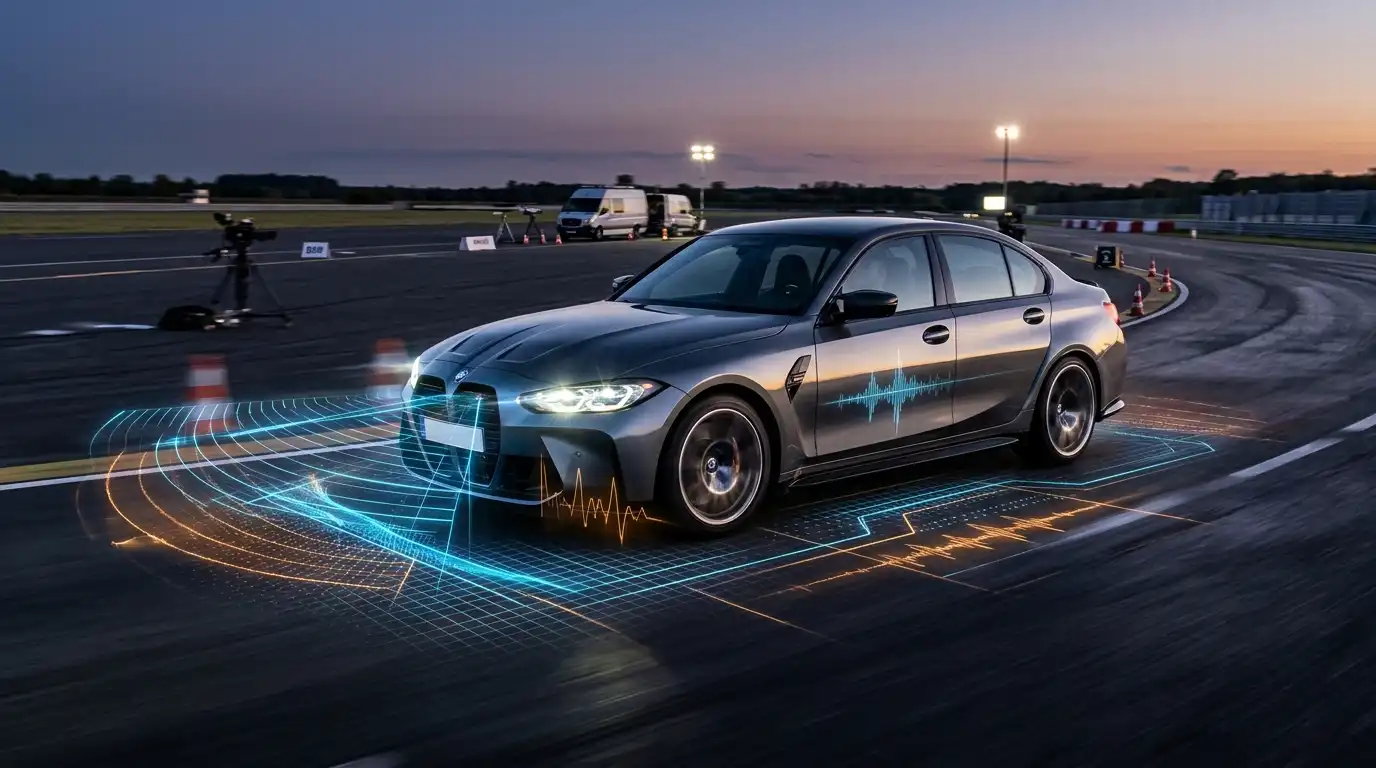
Active safety systems consist of all electronic, mechanical, and automated technologies that actively assist the driver in maintaining vehicle control, enhancing situational awareness, and avoiding collisions altogether. These systems operate preemptively while the vehicle is in motion. In many instances, modern driver assistance technologies intervene so smoothly that drivers barely notice the system correcting a trajectory or pre-charging the brakes.
Key active safety features in modern vehicles include:
- Automatic Emergency Braking (AEB) & Forward Collision Warning: Utilizing forward-facing radar and stereo optical cameras, AEB monitors traffic ahead. If a sudden obstacle, vehicle, or pedestrian is detected and the driver fails to react, the system provides visual and audible alerts before automatically applying maximum braking pressure to mitigate or prevent impact.
- Lane Departure Warning (LDW) & Lane Keeping Assist (LKA): LDW tracks painted road markings and alerts the driver if the vehicle unintentionally drifts out of its lane. LKA takes active safety a step further by applying micro-steering adjustments to gently guide the vehicle back into the center of the lane.
- Electronic Stability Control (ESC) & Anti-Lock Braking Systems (ABS): The foundation of active car safety. ABS prevents wheel lockup during sudden stops to preserve steering control, while ESC automatically modulates individual wheel braking power when it detects a loss of traction or excessive yaw.
- Blind-Spot Monitoring (BSM) & Adaptive Cruise Control (ACC): BSM uses side- and rear-mounted radar sensors to warn drivers of hidden vehicles in adjacent lanes, while ACC dynamically adjusts vehicle speed to maintain a safe following distance in heavy highway traffic.
To explore how independent safety organizations rigorously evaluate these driver-assist technologies, review the IIHS Advanced Driver Assistance Research. Their testing protocols assess how well active collision avoidance suites handle real-world driving threats.
2. What Are Passive Safety Systems? (Protection During and After the Impact)
While active safety works tirelessly to keep you out of harm’s way, passive safety features remain completely silent until a crash is inevitable. Once a collision occurs, passive safety systems engage within milliseconds to manage the immense crash forces, slow down passenger deceleration, and maintain cabin structural integrity.
Essential passive safety components include:
- Engineered Crumple Zones: Frontal and rear vehicle structures are intentionally designed to deform predictably in an impact. By crushing inward in a controlled sequence, crumple zones act as structural shock absorbers, extending the impact duration and absorbing massive amounts of kinetic energy before it reaches the passenger cabin.
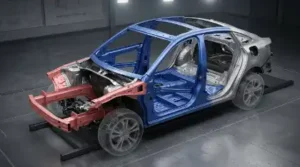
- Reinforced Safety Cage (Occupant Cell): Surrounding the crumple zones is a ultra-high-strength steel or aluminum safety cell. Featuring reinforced A-, B-, and C-pillars alongside high-strength side impact beams, this rigid cage prevents intrusion into the passenger space during severe offset hits or rollover events.
- Advanced Seat Belt Pretensioners & Load Limiters: Seat belts are the single most effective passive safety device ever invented. Modern seat belt assemblies use pyrotechnic pretensioners that instantly cinch the belt tight upon crash detection, while load limiters slowly release small amounts of webbing to prevent chest injuries caused by excessive belt restraint force.
- Supplemental Restraint System (SRS) Airbags: Deployed in 20 to 30 milliseconds after impact sensors trigger, modern airbag suites include dual-stage frontal airbags, side curtain airbags, knee airbags, and seat-mounted side airbags. They cushion passengers and prevent direct contact with hard interior surfaces like the steering wheel, dashboard, or side glass.
For an in-depth look at regulatory safety standards, mandatory equipment, and consumer crash testing ratings, check out the AARP Vehicle Safety Ratings Breakdown. This resource explains how federal crash ratings quantify passive occupant protection during simulated accidents.
3. The Co-Dependence of Active and Passive Safety
It is tempting to view active and passive safety as separate eras of automotive engineering—the mechanical age versus the digital age. In reality, modern car design treats them as an integrated safety ecosystem. Active and passive systems constantly communicate and rely on one another to achieve maximum protection.
Consider a emergency scenario on a wet highway: as a vehicle ahead comes to a dead stop, your car’s Automatic Emergency Braking (active safety) immediately kicks in. Even if the stopping distance is too short to avoid impact entirely, the active braking drastically reduces the vehicle’s speed from 60 mph down to 20 mph before collision. That reduction in velocity dramatically lowers the crash forces that your crumple zones, seat belt pretensioners, and airbags (passive safety) must handle. By scrubbing off kinetic energy beforehand, active safety transforms what could have been a catastrophic accident into a manageable, survivable event.
Furthermore, modern vehicle computers link these systems directly. When forward radar sensors detect an unavoidable collision milliseconds before impact, the central control unit can pre-tension the seat belts, close the windows and sunroof to maintain structural cage rigidity, and pre-charge the brake assist hydraulics for immediate stopping power.
4. How Safety Design Influences Modern Vehicle Exterior Styling
Car safety technology does not exist in a vacuum—it fundamentally dictates how modern cars are styled. Exterior car design over the last decade has undergone noticeable shifts directly driven by safety mandates:
- Higher Hood Lines & Softer Front Fascias: Global pedestrian safety regulations require cars to feature taller front ends and soft-yield bumpers. This creates a energy-absorbing cushion between the outer hood aluminum and the hard engine components beneath, reducing impact severity for pedestrians.
- Thicker B-Pillars & Higher Beltlines: Enhanced side-impact and roof-strength crash testing standards have led designers to create wider structural pillars and higher window sill lines, resulting in the bold, high-waisted silhouettes seen on modern crossovers and sedans.
- Seamless Sensor Integration: Designers now sculpt front grilles, side mirrors, and bumper valances around millimeter-wave radar units, ultrasonic parking sensors, and optical cameras without disrupting aerodynamic efficiency.
Conclusion: The Ultimate Safety Net
When shopping for a vehicle or admiring the latest automotive designs, looking beyond raw horsepower or touchscreen sizes is essential. True engineering excellence lies in how harmoniously a vehicle integrates active crash avoidance tech with robust passive structural safety. As autonomous capabilities advance and sensor networks grow more intelligent, active safety will continue to diminish crash risks. Yet, no matter how smart our cars become, the underlying physics of kinetic energy mean that high-strength steel cages, crumple zones, and air cushion restraints will remain human life’s ultimate backup plan.