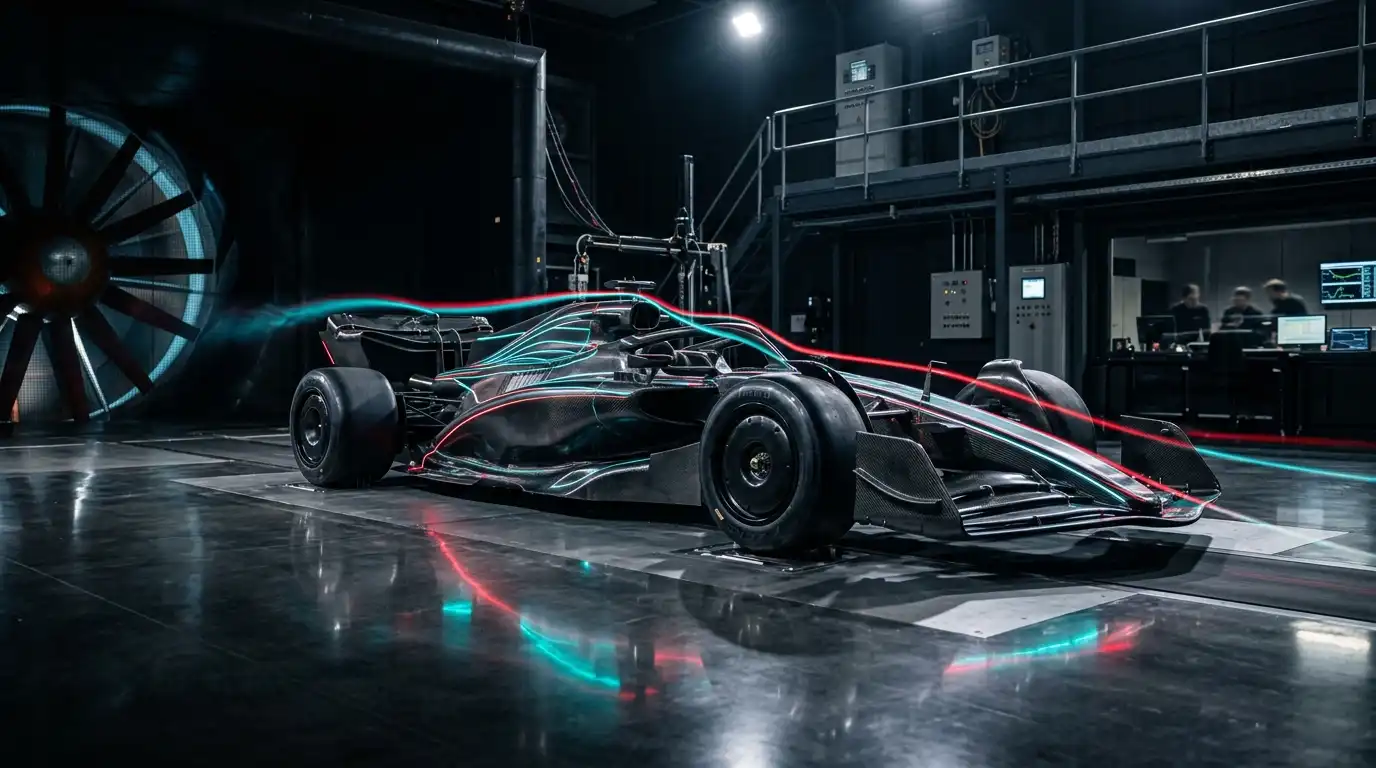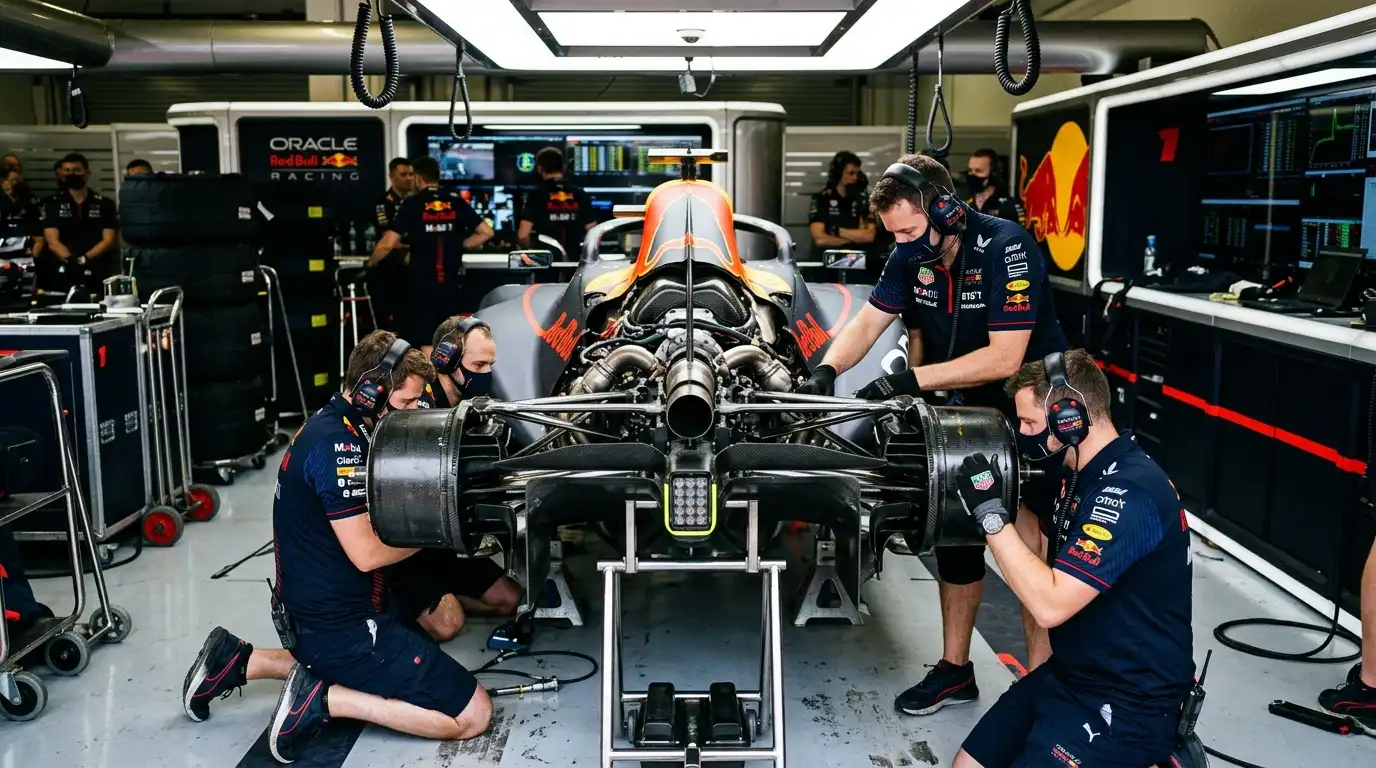
In a move that has sent shockwaves through the Formula 1 paddock, Red Bull Racing has officially made the call to shift the vast majority of its technical resources away from its ongoing 2026 development program. Instead of pouring vital wind tunnel hours and cost cap budget into salvaging a turbulent championship campaign, the Milton Keynes squad is pivoting early to focus almost exclusively on its 2027 package. For an organization built on relentless competitive aggression, admitting defeat mid-season represents a seismic strategic gamble—one that highlights both the severe teething troubles of the new technical era and the unforgiving economics of modern Grand Prix racing.
The 2026 Regulation Trap: Why Milton Keynes Hit a Wall
 The 2026 technical regulations were promised as a clean slate for Formula 1, introducing active aerodynamics alongside a massive 50/50 electrical and thermal power split. However, navigating a radical engine reset while simultaneously managing intricate chassis and active aero integration has proven far more treacherous than anticipated. While rivals such as McLaren and Mercedes unlocked early setup windows and strong power unit efficiency, Red Bull’s RB22 chassis has been plagued by stubborn balance anomalies and persistent high-speed vibration issues.
Central to these difficulties is the sheer complexity of the new hybrid powertrain architectures. Integrating the updated energy recovery systems into a completely redefined dynamic chassis demands seamless coordination between engine dynos and aerothermal design. Early in the 2026 campaign, it became evident that incremental upgrades brought to the track were yielding diminishing returns. Rather than closing the gap to the front-runners, late-spring aerodynamic packages failed to translate CFD data into on-track downforce, leaving engineering leadership with a stark choice: continue burning capital on marginal gains or cut their losses early.
Understanding the Cost Cap & Aerodynamic Testing Restrictions
In previous eras of Formula 1, a team with Red Bull’s vast financial resources could simply run parallel development projects—throwing unrestricted budgets and endless wind tunnel hours at fixing the current car while simultaneously building next year’s chassis. Under the modern Financial Regulations and Aerodynamic Testing Restrictions (ATR), that brute-force approach is strictly prohibited.
Every dollar spent manufacturing temporary floor revisions or revised wing assemblies for the remainder of 2026 directly detracts from the resource ceiling allocated for 2027. Furthermore, wind tunnel occupancy time and Computational Fluid Dynamics (CFD) limits enforce a zero-sum game. By making a decisive break before the summer shutdown, team principal and technical leadership can reallocate precious ATR allocation toward fundamental architectural concepts for the 2027 car rather than patching a fundamentally flawed 2026 platform.
| Resource Category | 2026 In-Season Focus | 2027 Early Pivot Strategy |
|---|---|---|
| Wind Tunnel Time | Incremental floor & wing tweaks | Full concept simulation for 2027 chassis |
| R&D Expenditure | Emergency weight reduction kits | Long-term powertrain integration |
| Engineering Focus | Setup patch solutions | Fundamental aerodynamic balance |
Max Verstappen’s Future and Driver Market Dynamics
No strategic pivot occurs in a vacuum, and Red Bull’s decision carries huge implications for its star driver, Max Verstappen. Throughout the opening rounds of 2026, Verstappen has been vocal regarding the erratic handling characteristics of the RB22 and the compromises required to manage battery depletion down long straights. For a driver who demands absolute precision on entry, fighting a recalcitrant chassis for minor points finishes is a grueling prospect.
By shifting focus to 2027, team management is offering a long-term commitment to performance recovery, but it also asks for short-term patience from a driver accustomed to winning. The move inevitably stirs speculation across the driver market. Rivals will undoubtedly monitor Verstappen’s body language as Red Bull navigates the remaining races of 2026 with minimal development support. Ensuring that the three-time world champion remains aligned with the team’s vision during a fallow period will test Milton Keynes’ leadership just as much as any technical challenge.
Historical Precedents: When Early Pivots Pay Off
Surrendering a current season to focus on future regulations is not without precedent in Formula 1 history, and when executed correctly, it has yielded dominant championship eras:
- Mercedes (2013 into 2014): Mercedes famously scaled back late-stage development on their 2013 car to dedicate maximum engineering bandwidth toward the V6 Turbo-Hybrid era, initiating an unprecedented eight-year Constructors’ streak.
- Brawn GP / Honda (2008 into 2009): Honda sacrificed their entire 2008 season to focus on the 2009 double-diffuser aerodynamic overhaul, laying the foundation for Brawn GP’s fairytale world championship.
- Ferrari (2021 into 2022): Ferrari abandoned 2021 upgrades early to focus on the ground-effect reboot, returning in 2022 with a race-winning package right out of the gate.
However, the risk is equally pronounced. If the core assumptions guiding the early 2027 development path are flawed, a team risks falling behind across consecutive seasons, compounding their technical deficit while rivals gain momentum.
What to Expect for the Remainder of the 2026 Season
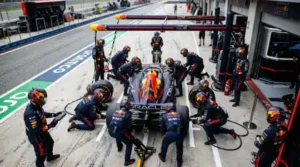 For fans and trackside engineers, the second half of 2026 will require a calibration of expectations. Upgrades arriving at the circuit will largely be limited to pre-manufactured components or track-specific low-drag setups required for high-speed venues like Monza and Spa-Francorchamps. The primary objective on race weekends will shift from pure lap time extraction to data collection, testing experimental mechanical setups and correlation tools that feed directly into 2027 simulations.
Red Bull Racing has never been an organization that accepts second place quietly. By admitting that 2026 has slipped beyond reach, Milton Keynes is taking a calculated, hard-nosed business decision. The pain of mid-grid squabbles over the coming months is viewed as a necessary price to pay for reclaiming top-step dominance when 2027 arrives.