The dawn of the 2026 Formula 1 era was heralded as a masterpiece of sustainable engineering—a bold leap toward a 50/50 split between internal combustion and electrical power. However, just three races into the 2026 season, the “Masterpiece” is facing a massive safety reckoning. Following a terrifying incident at the Japanese Grand Prix involving Haas rookie Oliver Bearman and Alpine’s Franco Colapinto, the FIA has called for an emergency technical summit this week. The agenda? Solving the “Closing Speed” crisis before the pack arrives in Miami.
The Suzuka Catalyst: A 50G Wake-Up Call
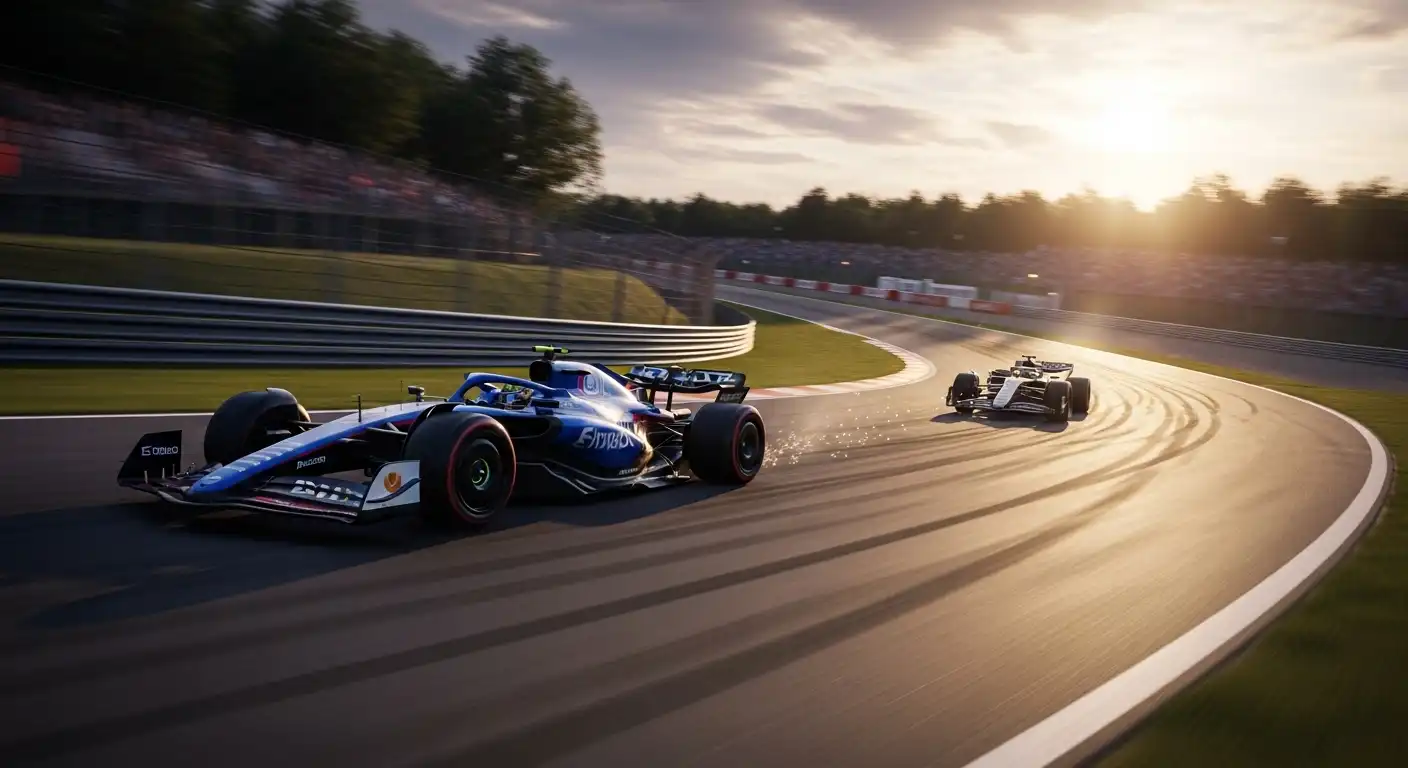
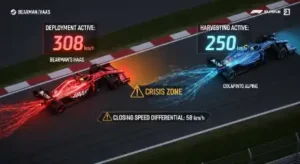 The incident that triggered this week’s emergency meeting occurred at the notorious Spoon Curve during the Japanese Grand Prix. Oliver Bearman, enjoying a full electrical deployment, was traveling at nearly 305km/h. Directly ahead, Franco Colapinto was “harvesting”—a process where the car’s MGU-K aggressively recovers energy, causing a significant, sudden drop in speed. The speed differential was clocked at a staggering 50km/h.
Bearman was forced to take evasive action onto the grass at high speed, leading to a 50G impact with the barriers. While Bearman walked away, the Grand Prix Drivers’ Association (GPDA), led by veteran voices like Carlos Sainz, has been vocal. The consensus is clear: the current regulations have created a “Yo-Yo” effect that turns the track into a high-stakes game of chicken.
The Science of the “Yo-Yo” Effect
To understand the crisis, one must look at the 2026 Power Unit (PU) architecture. By removing the MGU-H (which harvested heat from the turbocharger) and tripling the power of the MGU-K (kinetic recovery), the FIA mandated a system that relies heavily on braking and “clipping” to stay charged. In the 2026 cars, the Internal Combustion Engine (ICE) drops from 550kW to roughly 400kW, while the battery output jumps to 350kW.
The problem arises during “recharge” laps or specific high-speed harvesting zones. When a car ahead enters a “super-clipping” phase to save energy for a later attack, it effectively hits an invisible wall. For the car behind, which may be in its own deployment phase, the closing speed is unlike anything seen in the hybrid era. This isn’t just a technical quirk; it’s a fundamental safety flaw in how energy is managed across a race distance.
What the FIA Emergency Meeting Hopes to Solve
This week’s meeting, led by FIA Single-Seater Director Nikolas Tombazis, isn’t about scrap-heap changes—it’s about immediate software and regulatory patches. Here are the three primary solutions on the table:
- Ramp-Down Standardization: Implementing a mandatory “soft” ramp-down for energy harvesting to prevent sudden decelerations on straights or in high-speed sweeps.
- Active Aero Integration: Tweaking the “X-Mode” (low drag) and “Z-Mode” (high downforce) transitions to ensure cars don’t become aerodynamically unstable when a speed differential occurs.
- Telemetry Warning Systems: Introducing a “High Speed Differential” warning on the Marshalling System, alerting drivers via their steering wheel LEDs when a car ahead is harvesting aggressively.
The “Non-Flat-Out” Dilemma
Critics of the 2026 rules, including several team principals, argued during pre-season testing that these cars would struggle to do a single flying lap flat-out. This prediction has come true. In race trim, drivers are often forced to “lift and coast” even on primary straights to ensure they have enough juice for an overtake later in the lap. This has led to a bizarre spectacle where the “pinnacle of motorsport” looks, at times, like an endurance economy run.
As we’ve noted in our previous coverage of Active Aero technology, the struggle to balance drag reduction with energy recovery is the defining engineering challenge of this decade. If the FIA can’t find a middle ground, we may see further race cancellations similar to the April spring break adjustments caused by geopolitical shifts.
Is a Return to V10s a Reality?
While rumors have swirled about the FIA “binning” the 2026 units in favor of a return to V10s with sustainable fuels for 2027, this remains highly unlikely. Manufacturers like Audi and Ford have invested billions into the current hybrid framework. However, the pressure is on. The FIA must prove that “green” racing doesn’t have to mean “dangerous” racing. The results of the April 20 meeting, which will include F1 CEO Stefano Domenicali, will likely dictate the technical trajectory of the sport for the next five years.
Broader Impacts on the Motorsport Landscape
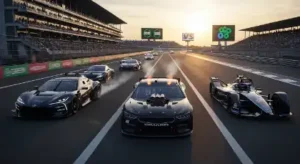 The F1 2026 crisis isn’t happening in a vacuum. Other series are watching closely. For instance, the rise of hydrogen-powered GT racing in Asia offers a different path toward sustainability without the complexities of high-output MGU-K harvesting. Similarly, the New England Truck Series continues to thrive on more traditional mechanical platforms, highlighting the growing divide between “high-tech” and “pure-racing” fans.
Conclusion: A Fork in the Road for F1
Formula 1 has always been about the edge of the envelope, but the Bearman crash suggests the envelope might be torn. This week’s FIA meeting is the most critical technical summit since the introduction of the Halo. If they can solve the closing speed crisis through software optimization and aero tweaks, F1 2026 can fulfill its promise. If not, the “pinnacle of motorsport” faces a long, slow harvest toward irrelevance.
For more deep-dives into the world of 2026 motorsport, check out our analysis of the latest automotive tech trends or stay tuned for our Miami Grand Prix preview.